 The Revolution of 1789 was, as we know, not a single revolution at all. It was at least a half dozen revolutions, each kicking at the heels of the one before it. The last was, in fact, Napoleonic. In 1799 he and his colleagues of Brumaire revolutionized France with the Consulate and later with the Empire. "The revolution is over," Napoleon had remarked in his statement to the people of France in December 1799. He was the revolution. He had brought order out of chaos.
As the events of the Revolution unfolded in 1789, women continued their pre-revolutionary public presence. Some even managed to make their grievances known to the king in unofficial cahiers de doléances when he requested suggestions for reframing French affairs. They demanded that some categories of jobs be reserved solely for women, that job training be provided, and that strict measures be taken against prostitution. Divorce, the right to wear trousers (pantalons), the right to vote, and a double tax on bachelors rounded out their lists. At least one woman participated actively in the fall of the Bastille, and when the economic malaise of the summer of 1789 continued into autumn, street savvy female activists and other less likely malcontents marched to the halls of government at Versailles. According to reports, after they promised good behavior, the women milled around, sat in the president's chair, chanted and interrupted the debate. The Journal de Paris reported that while they wore elegant clothing, hunting knives and half swords hung from their belts. Among the alleged heroines was Théroigne de Méricourt, the amazone who popularized women's battle dress: Turkish trousers or bloomers (although the word bloomers was not used until the mid-nineteenth century), a red riding habit, and pistols and a sword at her waist.
The Revolution of 1789 was, as we know, not a single revolution at all. It was at least a half dozen revolutions, each kicking at the heels of the one before it. The last was, in fact, Napoleonic. In 1799 he and his colleagues of Brumaire revolutionized France with the Consulate and later with the Empire. "The revolution is over," Napoleon had remarked in his statement to the people of France in December 1799. He was the revolution. He had brought order out of chaos.
As the events of the Revolution unfolded in 1789, women continued their pre-revolutionary public presence. Some even managed to make their grievances known to the king in unofficial cahiers de doléances when he requested suggestions for reframing French affairs. They demanded that some categories of jobs be reserved solely for women, that job training be provided, and that strict measures be taken against prostitution. Divorce, the right to wear trousers (pantalons), the right to vote, and a double tax on bachelors rounded out their lists. At least one woman participated actively in the fall of the Bastille, and when the economic malaise of the summer of 1789 continued into autumn, street savvy female activists and other less likely malcontents marched to the halls of government at Versailles. According to reports, after they promised good behavior, the women milled around, sat in the president's chair, chanted and interrupted the debate. The Journal de Paris reported that while they wore elegant clothing, hunting knives and half swords hung from their belts. Among the alleged heroines was Théroigne de Méricourt, the amazone who popularized women's battle dress: Turkish trousers or bloomers (although the word bloomers was not used until the mid-nineteenth century), a red riding habit, and pistols and a sword at her waist.
To Olympe de Gouges, a provincial actress who had relocated in Paris, the revolution had missed its mark. Paralleling the primary document of revolutionary ideology, she wrote: "Woman is born free and lives equal to man in her rights…." She continued, "man, are you capable of being just? It is a woman who poses the question. Tell me, what gives you the sovereign empire to oppress my sex?" If a woman could mount to the guillotine to feel its blade, she should equally have the right to vote.
 By 1800 as Napoleon solidified his base of power and defined the roles of those around him, he began to make clear what he believed women's roles should be. Mme de Staël bore the brunt of some of his earliest comments. When she asked him "What woman, dead or alive, do you consider to be the greatest?" he replied, "The one who has had the most children."
The family, of course, became a recurring theme of his government. Even when the family was not at the base of his comments, he was systematically blunt in his remarks. When Mme de Staël was presented in one of her more décolletage dresses, prior to his establishing a more decorous style for fashion, he caught her off guard and silenced her with "no doubt you have nursed your children yourself."
By 1800 as Napoleon solidified his base of power and defined the roles of those around him, he began to make clear what he believed women's roles should be. Mme de Staël bore the brunt of some of his earliest comments. When she asked him "What woman, dead or alive, do you consider to be the greatest?" he replied, "The one who has had the most children."
The family, of course, became a recurring theme of his government. Even when the family was not at the base of his comments, he was systematically blunt in his remarks. When Mme de Staël was presented in one of her more décolletage dresses, prior to his establishing a more decorous style for fashion, he caught her off guard and silenced her with "no doubt you have nursed your children yourself."
And finally, there was Joséphine herself, widely regarded as one of the most attractive women of her day. For all of the peccadilloes of her early years, she was also indispensable in consolidating his empire. What Napoleon wanted was splendor, glory, gilt if not gold, and glamour: "Nothing is beautiful unless it is large. Vastness and immensity can make you forget a great many defects." His vastness was the creation of a new nobility that he intended to be unrivaled. Around Empress Joséphine a certain cult was born. Everyone wanted to know where she found her garments, where her hair was coiffed, and from where her jewels came. Au Grand Turc became the rage for silk scarves. Her perfumer was A la Cloche d'Argent, and only the best lace from Chantilly and Brussels would do. But when Joséphine did not bear him the child that he so desired, Napoleon found no difficulty in moving on. "All being said," he wrote at St. Helena, "I like only those people who are useful to me, and only so long as they are useful."napoleon/files/
wiki/Madame_de_Stael


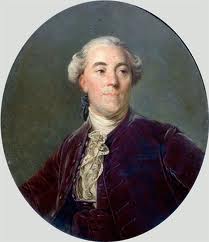


 The Revolution of 1789 was, as we know, not a single revolution at all. It was at least a half dozen revolutions, each kicking at the heels of the one before it. The last was, in fact, Napoleonic. In 1799 he and his colleagues of Brumaire revolutionized France with the Consulate and later with the Empire. "The revolution is over," Napoleon had remarked in his statement to the people of France in December 1799. He was the revolution. He had brought order out of chaos.

 By 1800 as Napoleon solidified his base of power and defined the roles of those around him, he began to make clear what he believed women's roles should be. Mme de Staël bore the brunt of some of his earliest comments. When she asked him "What woman, dead or alive, do you consider to be the greatest?" he replied, "The one who has had the most children."


